


How AI WhatsApp CRM automates sales tasks and saves teams one full workday
AI WhatsApp CRM helps sales teams automate repetitive tasks such as lead capture, responses, follow-ups, and CRM updates. By combining messaging with AI automation, businesses improve response time, streamline workflows, and free up valuable time for sales teams to focus on closing deals.
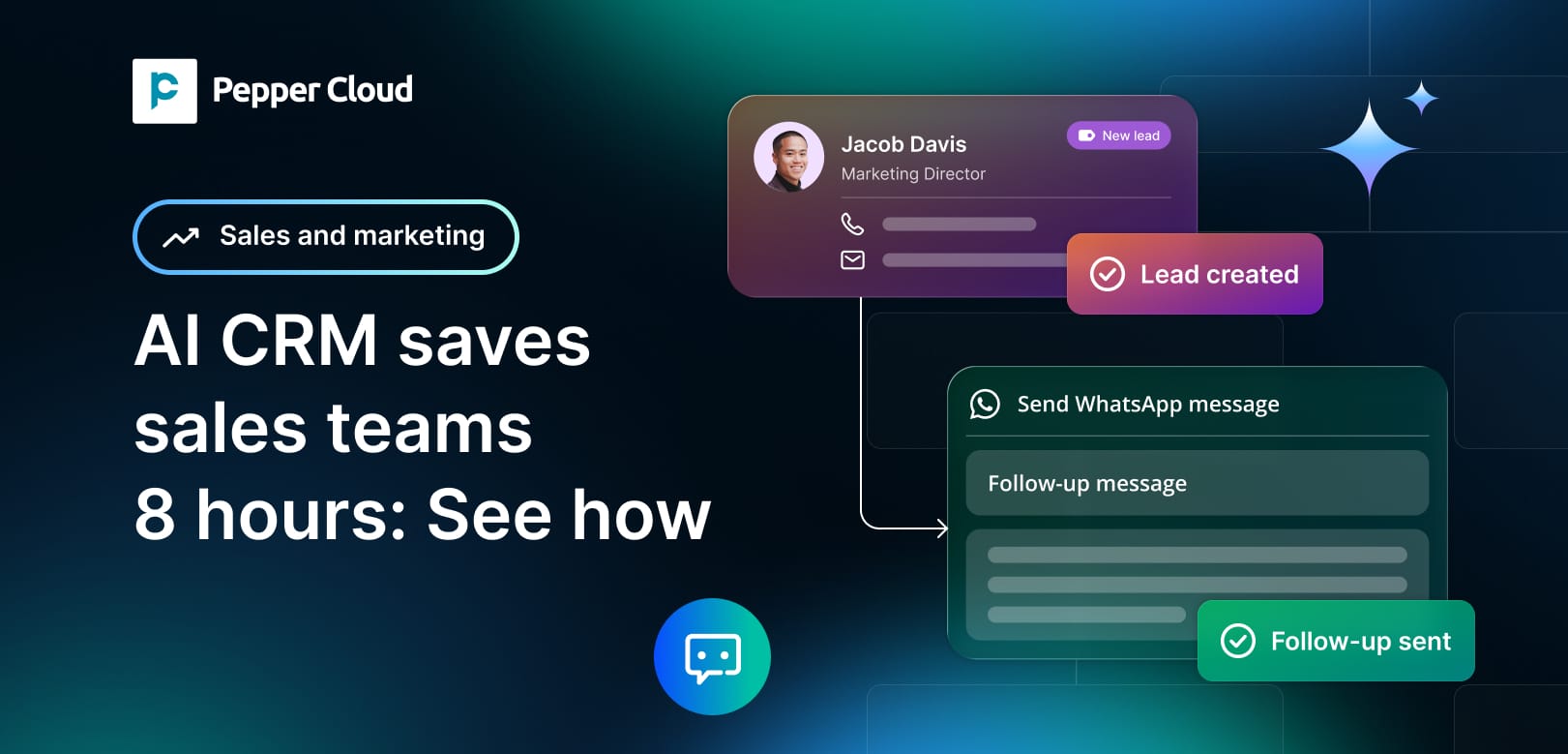

Imagine a sales team starting their day. The inbox is full of WhatsApp enquiries from prospects asking about pricing, product demos, delivery timelines, and follow-ups.
Meanwhile, the CRM dashboard needs updating, leads from campaigns must be captured, reminders for follow-ups have to be scheduled, and every conversation must be logged manually.
By noon, the team has already spent several hours performing repetitive tasks instead of actually selling.
This scenario is common across many businesses. Many studies suggest that sales teams spend nearly 60–70% of their time on administrative and manual activities rather than selling, leaving very limited time for meaningful customer interactions.
This is where AI WhatsApp CRM transforms the entire sales workflow. By combining conversational AI with CRM automation, businesses can automatically capture leads, respond to customer queries, assign conversations to the right sales agents, and update records without manual intervention.
The result is simple but powerful: sales teams reclaim an entire workday every week that was previously spent on repetitive operational tasks.
The operational challenges sales teams face without AI WhatsApp CRM
Before understanding how automation helps, it is important to examine the everyday problems sales teams experience when managing communication manually.
1. Manual lead capture from conversations
When a prospect sends a message on WhatsApp, sales representatives usually need to manually copy details such as name, phone number, interest level, and product enquiry into the CRM system.
This process may seem small but becomes extremely time-consuming when dozens or hundreds of conversations occur every day.
For example, a real estate sales team receiving 150 enquiries daily must manually log every conversation into their CRM, which can consume hours of administrative effort.
2. Repetitive responses to common customer queries
Many prospects ask similar questions such as:
- Product pricing
- Available plans
- Product features
- Demo availability
Sales representatives repeatedly type the same responses multiple times every day. Over time, this repetitive communication consumes valuable selling time.
3. Missed follow-ups and delayed responses
Sales opportunities are often lost because follow-ups are forgotten or delayed. When sales teams manage conversations manually, it becomes difficult to track which prospects require reminders or updates. Even a small delay in response can reduce conversion chances significantly.
4. Conversations scattered across multiple devices
In many organisations, Conversations happen on individual sales representatives' phones. This creates multiple operational issues:
- No central visibility for managers
- Difficulty tracking lead progress
- Risk of losing customer data
Without a unified sales CRM , collaboration becomes extremely challenging.
5. Manual lead assignment to sales agents
When a new enquiry arrives, sales managers often manually assign leads to team members based on availability, territory, or expertise. This manual distribution slows down response time and increases operational workload.
6. Poor visibility into customer interactions
Sales leaders struggle to analyse conversation history, response time, and customer engagement because chats are not automatically integrated with CRM data. This limits performance insights and makes it difficult to optimise sales processes.
7. Excessive time spent on administrative work
When lead logging, follow-ups, reminders, updates, and reporting are done manually, sales teams end up spending hours on non-selling tasks.
Instead of focusing on nurturing prospects, they spend their time managing operational workflows.
 Pepper Cloud Marketing
How AI WhatsApp CRM automates sales tasks and saves teams one full workday
AI WhatsApp CRM eliminates these operational bottlenecks by automating repetitive tasks and intelligently managing conversations. Let us examine how this transformation happens.
1. Automatic lead capture from WhatsApp conversations
An AI WhatsApp CRM automatically identifies incoming enquiries and captures customer information into the CRM system in real time.
When a prospect sends a message such as: "Hi, I would like to know about your enterprise plan."
The system automatically records such as phone number, enquiry topic, timestamp and conversation history.
For example, a SaaS company running digital campaigns can automatically capture all WhatsApp enquiries and instantly create CRM leads without requiring manual entry by sales agents. This alone saves 8 hours every week.
2. AI-powered instant responses to common enquiries
AI chat capabilities enable WhatsApp sales CRM systems to respond instantly to frequently asked questions.
Instead of waiting for a sales representative, customers receive immediate responses about pricing plans, product features, appointment scheduling and onboarding information with the help of AI powered Chatbot.
For instance, an online education provider receiving thousands of student enquiries can automate responses about course fees, class schedules, and registration processes.
The AI assistant handles the first layer of communication, while the sales team engages only when deeper consultation is required.
3. Smart lead qualification through conversational AI
Not every enquiry becomes a high-quality sales lead. AI WhatsApp CRM systems can automatically qualify prospects through structured conversations.
For example, the system may ask questions such as:
- What product are you interested in?
- What is your company size?
- When do you plan to purchase?
Based on the responses, the CRM categorises the lead as a hot prospect, nurturing lead and general enquiry. This ensures that sales teams prioritise high-value opportunities first.
 Pepper Cloud Marketing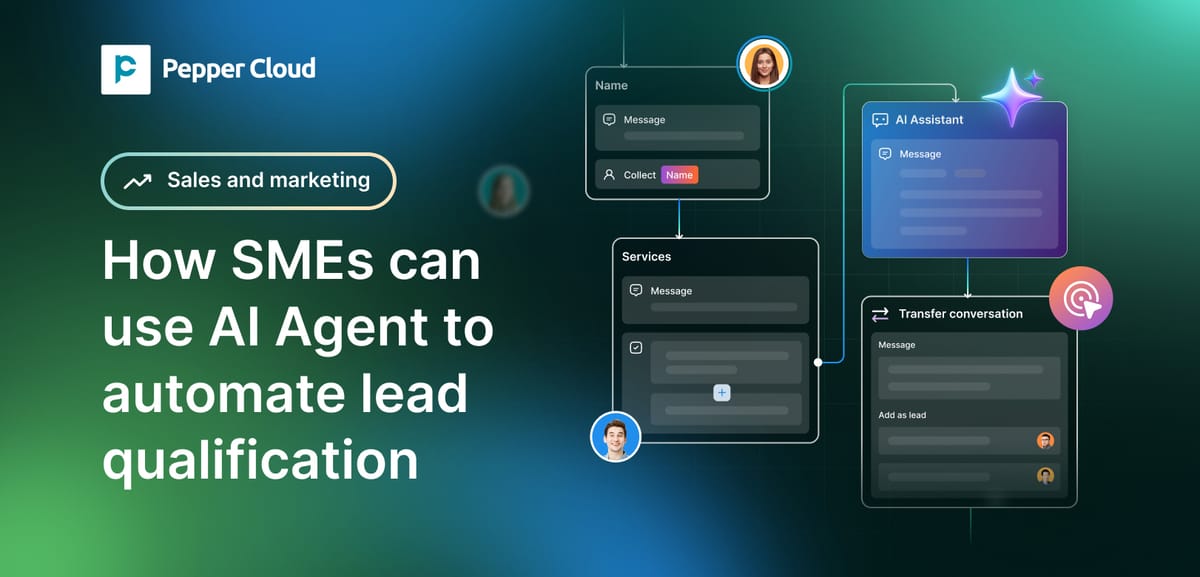
4. Automated follow-up reminders and sequences
Follow-ups are critical in sales, but they are also one of the most frequently missed tasks. AI WhatsApp CRM systems automatically schedule follow-up messages based on customer interactions.
With automated event notification and reminders:
- A demo reminder sent 24 hours before the meeting
- A follow-up message two days after a product enquiry
- A nurturing message with additional product information
This automation ensures no prospect is forgotten.
5. Intelligent lead routing to the right sales agent
When a new enquiry arrives, AI WhatsApp CRM automatically assigns the lead to the most appropriate sales representative.
Routing can be based on:
- Product category
- Agent availability
- Language translation
For instance, a financial services company may automatically route investment enquiries to specialised advisors while directing general queries to customer support. This eliminates manual allocation and speeds up response time.
6. Automatic CRM updates and conversation tracking
Every WhatsApp conversation is automatically logged into the CRM system.
Sales managers can easily view complete chat history, lead progress, engagement level and even response time. This creates a unified view of customer interactions and removes the need for manual data updates.
7. AI-driven sales insights and reporting
AI WhatsApp CRM also analyses conversation patterns to generate valuable insights. For example, the system can identify the most common customer questions, response time performance, peak enquiry hours and even their conversion patterns.
These insights allow sales leaders to optimise processes and improve team productivity.
8. Seamless integration with marketing campaigns
When businesses run marketing campaigns, WhatsApp often becomes a key response channel.
AI WhatsApp CRM automatically captures campaign leads and assigns them to the sales team.
For example, a digital marketing campaign promoting a free consultation can direct prospects to WhatsApp. The CRM instantly captures these enquiries and schedules consultations automatically. This removes manual coordination between marketing and sales teams.
Benefits of using AI WhatsApp CRM for sales teams
The automation capabilities of AI WhatsApp CRM provide several practical advantages.
Sales productivity increases significantly because representatives spend more time engaging with qualified prospects rather than performing administrative tasks.
Response time improves dramatically since AI assistants can reply instantly to customer enquiries.
Lead management becomes more organised, as every conversation is automatically recorded and tracked in the CRM.
Conversion rates improve because automated follow-ups ensure that prospects remain engaged throughout the buying journey.
Finally, sales managers gain complete visibility into team performance, customer interactions, and pipeline activity.
How AI WhatsApp CRM transforms modern sales workflows
Traditional sales workflows rely heavily on manual coordination between communication tools and CRM systems. AI WhatsApp CRM removes this complexity by creating a unified platform where messaging, automation, and lead management work together.
Instead of switching between WhatsApp, spreadsheets, and CRM dashboards, sales teams operate within a single system that automatically handles communication and data management.
This transformation allows organisations to scale their sales operations without increasing administrative workload.
The growing role of conversational automation in sales
Customer communication is rapidly shifting towards conversational platforms such as WhatsApp. Businesses that rely on manual processes struggle to keep up with the volume and speed of modern customer interactions.
AI-powered automation allows companies to maintain high-quality communication while handling thousands of enquiries efficiently.
By combining messaging convenience with CRM intelligence, AI WhatsApp CRM systems are becoming an essential tool for modern sales teams.
Conclusion
AI WhatsApp CRM solves this problem by automating these operational activities. From instant responses and automatic lead capture to intelligent routing and follow-up scheduling, the system ensures that sales processes run smoothly without constant manual effort.
As a result, sales teams can recover an entire workday every week that was previously lost to administrative tasks.
Businesses looking to streamline their sales communication can benefit from Pepper Cloud AI WhatsApp CRM.
With our AI CRM capabilities, organisations can improve response speed, enhance customer engagement, and empower their sales to build meaningful customer relationships and drive revenue growth. Book a demo to know more.
Frequently asked questions
1. What is the AI WhatsApp CRM?
AI WhatsApp CRM is a customer relationship management system integrated with WhatsApp that uses artificial intelligence to automate customer communication, lead capture, and sales workflows.
2. How does AI WhatsApp CRM save time for sales teams?
It automates repetitive tasks such as responding to common enquiries, logging leads, assigning conversations, and scheduling follow-ups, reducing manual work significantly.
3. Can AI WhatsApp CRM automatically capture leads?
Yes. The system can detect incoming enquiries and automatically create lead records within the CRM along with conversation details.
4. Is AI WhatsApp CRM suitable for small businesses?
Yes. Small businesses benefit greatly because automation helps manage customer enquiries efficiently even with smaller sales teams.
5. Does AI WhatsApp CRM replace human sales representatives?
No. It assists sales teams by handling routine communication while allowing representatives to focus on meaningful conversations and closing deals.
6. Can AI WhatsApp CRM integrate with marketing campaigns?
Yes. It can automatically capture leads from campaign responses and route them to the appropriate sales representatives.
7. How does Pepper Cloud AI WhatsApp CRM support sales automation?
Pepper Cloud AI WhatsApp CRM centralises customer conversations, automates lead management, and provides intelligent insights that help sales teams operate more efficiently and close deals faster.


