


Why hospitality businesses prefer AI WhatsApp CRM over email
Hospitality brands are shifting from email to AI WhatsApp CRM for faster guest engagement and smarter automation. This blog explores eight practical reasons why conversational CRM improves response times, service recovery, upselling success, and overall guest experience.
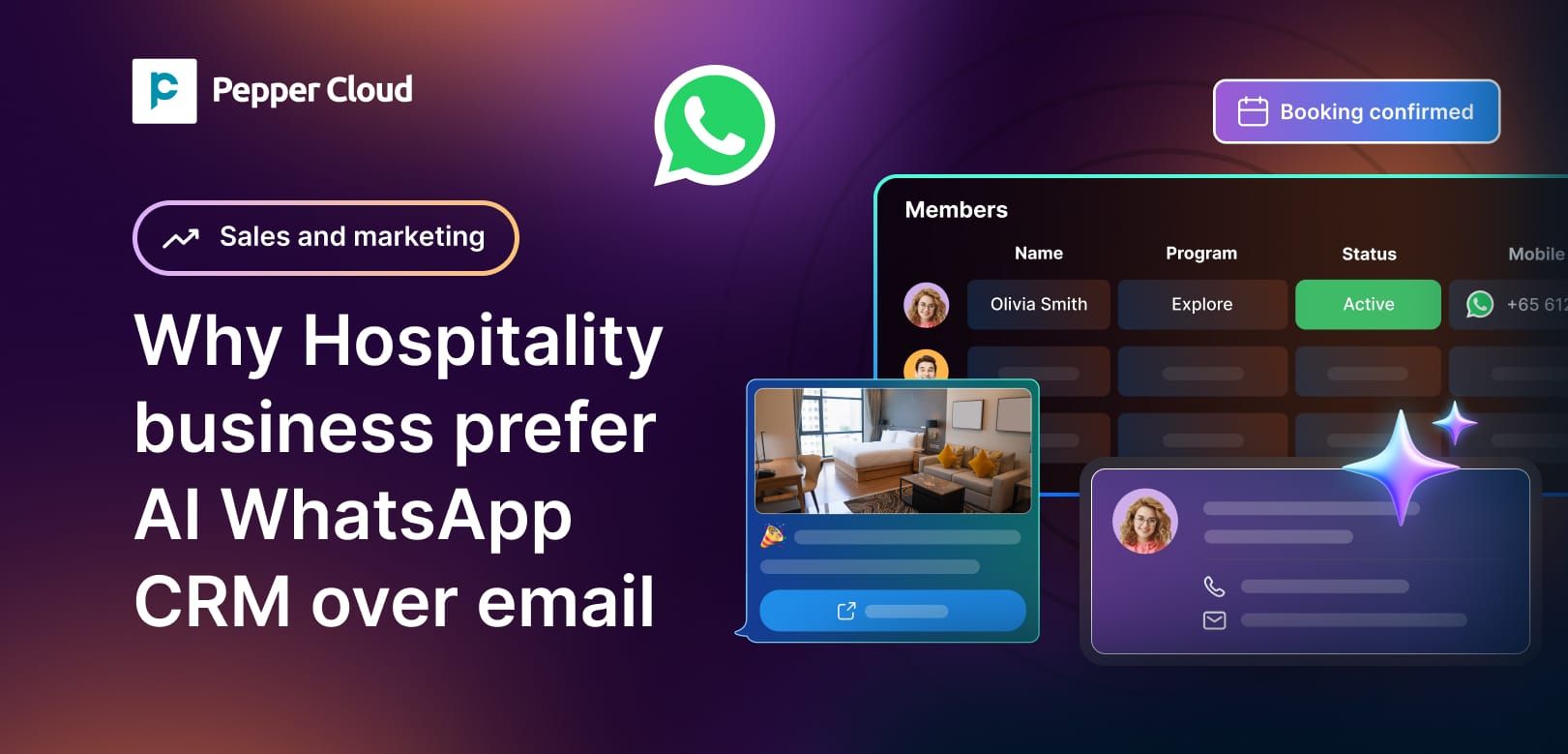

Ever noticed how a booking confirmation email sits unopened, while a simple WhatsApp message gets an instant reply? That gap is not accidental. It reflects how guest behaviour has fundamentally changed.
In hospitality, every minute matters. A missed check-in message, an unread upsell offer, or a delayed response to a room service query directly affects guest satisfaction and revenue.
Yet many hotels, resorts, serviced apartments, and travel operators still rely on email as their primary communication channel.
And the reality is over 95% of WhatsApp messages are opened within three minutes, while email open rates in hospitality often struggle to cross 25%.
Guests are not ignoring hospitality brands; they are simply communicating where it feels easiest.
This is exactly why SMB chooses AI WhatsApp CRM, they align with how guests think, respond, and make decisions.
The shift from inbox communication to conversational engagement
Email was designed for long-form, asynchronous communication. Hospitality, however, operates on real-time needs. A guest asking for early check-in, airport pickup, or late checkout expects clarity quickly, not hours later.
A WhatsApp CRM connects guest profiles, booking data, and automation inside a single conversational interface.
Instead of sending static emails, hospitality teams manage two-way conversations that continue before arrival, during the stay, and after check-out.
This shift changes the role of CRM from record-keeping to relationship management.
To make this difference tangible, the table below compares how WhatsApp CRM and email perform across core hospitality touchpoints.
AI WhatsApp CRM vs email communication in hospitality
This operational difference sets the foundation for the eight reasons below.
 Pepper Cloud Marketing
Reason 1: Guests respond faster because WhatsApp feels personal
Hospitality is emotional by nature. Guests do not want to feel like ticket numbers in an inbox.
Email messages often appear generic, even when personalised. A WhatsApp message, however, arrives like a direct note from the property. This psychological difference alone increases engagement.
For example, when a boutique hotel sends a WhatsApp message saying, “Your room will be ready by 1 PM. Would you like us to arrange luggage storage until then?” guests usually reply within minutes.
The same message sent via email often goes unanswered until after arrival.
This immediacy allows front desk teams to proactively manage expectations rather than react to complaints later.
Reason 2: WhatsApp fits naturally into the guest journey
Hospitality communication is not linear. Guests ask questions at unpredictable moments, often while travelling.
Email requires guests to open an app, search for a thread, and type a formal response. WhatsApp already lives on the guest’s phone, open and familiar.
A WhatsApp CRM integrates booking details, stay dates, and guest preferences into the chat, so conversations remain contextual.
A guest landing at an airport can ask about shuttle timing without digging through email confirmations.
This frictionless access improves guest confidence and reduces stress during travel.
Reason 3: Real-time service recovery becomes possible
Service recovery is where hospitality brands either win loyalty or lose trust.
Email delays slow down issue resolution. By the time a complaint is read, the guest may already be frustrated. WhatsApp CRM allows instant acknowledgement and faster resolution.
Consider a resort where a guest reports air-conditioning issues via WhatsApp at 9 PM.
The CRM routes the message to maintenance instantly, updates the guest once resolved, and logs the interaction automatically.
That same issue raised via email might be seen only the next morning, turning a small inconvenience into a negative review.
This speed directly impacts online ratings and repeat bookings.
Reason 4: Automation without losing the human touch
Automation in hospitality often fails when it feels robotic. CRM for customer support teams handles this balance better than email systems.
Automated messages can confirm bookings, share check-in instructions, or request ID documents, while still allowing seamless human takeover when needed.
A CRM with WhatsApp can automatically send pre-arrival messages three days before check-in, followed by a personalised welcome on arrival day. Guests feel guided, not spammed.
Unlike automated emails that feel mass-sent, WhatsApp automation works within a conversational flow, preserving warmth.
 Pepper Cloud Marketing
Reason 5: Upselling works better in conversations than campaigns
Email upselling relies on subject lines, banners, and links. WhatsApp upselling relies on conversation.
A hotel offering spa services can ask, “Would you like to reserve a massage slot for tomorrow evening?” instead of sending a promotional email.
This approach feels helpful rather than sales-driven.
For hospitality brands using AI CRM software for hospitality industry, WhatsApp enables context-based upsells triggered by stay duration, room type, or guest behaviour.
For instance, a guest staying three nights receives a personalised message about a late checkout option on the final day, increasing acceptance rates.
Reason 6: Centralised guest history improves consistency
One of the biggest operational challenges in hospitality is fragmented communication.
Emails sit in individual inboxes. Phone calls leave no trail. WhatsApp CRMs centralise every conversation into a single guest profile.
When a returning guest checks in, the team can instantly see previous preferences, complaints, and special requests.
A CRM for hospitality industry that uses WhatsApp ensures that no matter who responds, the tone and information remain consistent. This continuity builds trust and reduces internal miscommunication.
Reason 7: Multilingual communication becomes easier
Hospitality businesses serve guests from multiple countries. Email translation delays communication, while WhatsApp allows quick, informal clarification.
Many WhatsApp CRMs support message templates in multiple languages and quick translation tools. This is particularly valuable for travel operators and city hotels hosting international guests.
For example, a travel concierge managing airport transfers can communicate pickup details clearly without language confusion, improving arrival experiences.
This capability positions as the best CRM for travel and hospitality industry environments where diversity is constant.
 Pepper Cloud Marketing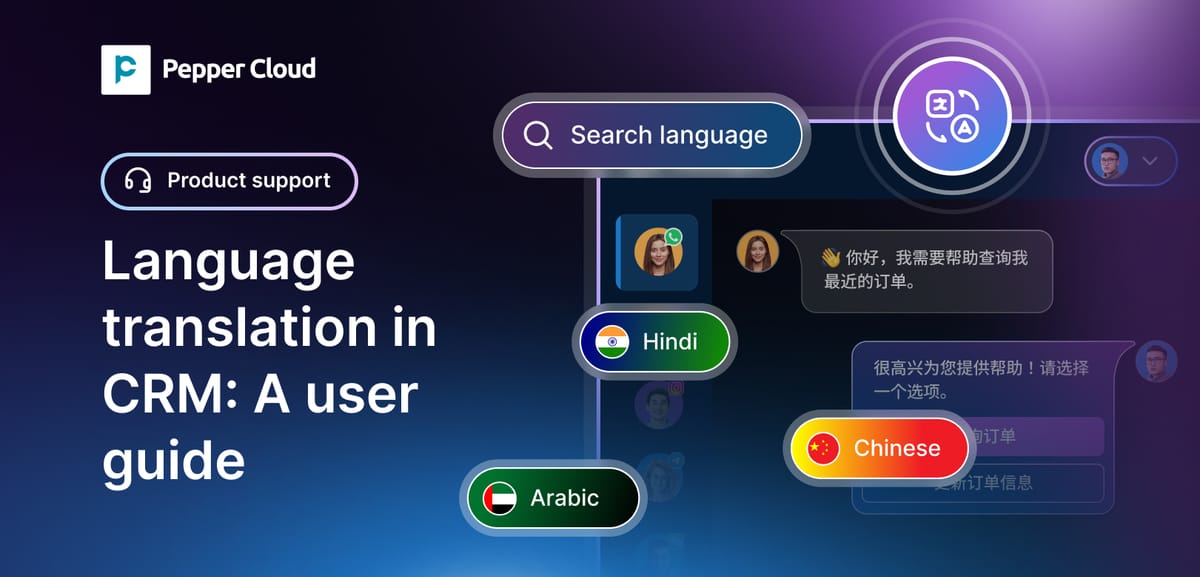
Reason 8: Data-driven insights improve future guest engagement
WhatsApp CRMs do more than send messages; they generate actionable data.
Hotels can track response times, frequently asked questions, and service bottlenecks. This insight helps optimise operations and improve future communication strategies.
Email analytics focus on opens and clicks. WhatsApp CRM analytics focus on conversations, resolutions, and satisfaction indicators.
For AI-powered CRM, this conversational data trains automation models to become smarter over time, predicting guest needs before they ask.
 Pepper Cloud Marketing
How AI WhatsApp CRM outperform email in real hospitality scenarios
To understand the difference clearly, consider a mid-scale city hotel managing 80 rooms.
With email-based communication:
- Guests email arrival questions individually
- Front desk staff manually replies
- Requests are often missed during peak hours
With AI WhatsApp CRM:
- Pre-arrival FAQs are automated
- Live requests are routed instantly
- Staff workload reduces while response quality improves
This operational efficiency is why hospitality brands increasingly replace email with conversational CRM platforms.
The role of AI in WhatsApp-based hospitality CRM
AI transforms WhatsApp from a messaging app into an intelligent guest engagement channel.
AI can classify messages, suggest replies, detect urgency, and trigger workflows automatically. For example, if multiple guests ask about breakfast timings, AI can prompt the team to update standard messaging.
This combination of AI and WhatsApp ensures that hospitality communication scales without losing its personal feel.
Why email still exists but no longer leads
Email still plays a role in formal documentation and long-form communication. However, it no longer leads guest engagement.
AI WhatsApp CRM complement email by handling real-time interactions, while email supports back-office communication.
Hospitality businesses that rely solely on email risk appearing slow and disconnected from guest expectations.
Final thoughts
Hospitality has always been about human connection. AI WhatsApp CRM align technology with this principle instead of replacing it.
By enabling faster responses, personalised engagement, and smarter automation, WhatsApp CRMs outperform email-based guest communication at every critical touchpoint.
As guest expectations continue to evolve, hospitality brands that adopt conversational CRM strategies will deliver smoother stays, stronger reviews, and higher lifetime value.
In an industry where experience defines success, choosing the right communication channel is no longer optional, it is strategic.
If the goal is to reduce response times, improve guest satisfaction, and turn conversations into repeat bookings, Pepper Cloud AI WhatsApp CRM makes it happen, all from one intelligent dashboard.
Book a demo with Pepper Cloud today and see how WhatsApp-led guest communication can increase your hospitality experience.
Frequently asked questions
1. How does a WhatsApp CRM improve guest experience in hospitality?
It enables instant, two-way communication for bookings, service requests, and updates. Guests get faster responses, fewer delays, and a smoother stay experience without relying on emails or calls.
2. Is WhatsApp communication secure for hotel and travel businesses?
Yes. WhatsApp uses end-to-end encryption, and platforms like Pepper Cloud add access controls, centralised dashboards, and conversation tracking to protect guest data.
3. Can WhatsApp CRMs handle high guest volumes during peak seasons?
Yes. Automation, AI-assisted replies, and message routing help teams manage large volumes efficiently without increasing staff workload during busy periods.
4. Does WhatsApp CRM replace front desk staff or email communication?
No. It supports staff by automating routine communication while allowing teams to handle complex guest queries personally. Email can still be used for formal communication.
5. How quickly can a hospitality business implement Pepper Cloud?
Implementation is fast and simple. Most hospitality teams can start using Pepper Cloud within days, with minimal training required.


