


EDGE Grant Singapore 2026: A complete guide for businesses
Explore EDGE Grant in Singapore and understand how eligible businesses can access digitalisation funding. Learn about SME eligibility, funding limits, activity cost caps and the package builder process, with practical steps to prepare a project and submit a grant application with greater clarity.

Are you planning to upgrade your business operations, invest in new technology or expand into an overseas market, but want to understand what government funding is available? The EDGE Grant in Singapore could help eligible businesses manage the cost of these projects while building capabilities for long-term growth.
Launched on 30 September 2026 by Enterprise Singapore, the EDGE Grant brings together the former Enterprise Development Grant (EDG), Productivity Solutions Grant (PSG) and Market Readiness Assistance (MRA) schemes under one funding framework.
It covers more than 150 activities across eight business areas, giving companies a central place to explore support for digitalisation, automation, business strategy, innovation and international expansion.
Eligible businesses can receive up to S$100,000 in total grant support per year across eligible activities. Funding rates vary by activity, with standard support of up to 50% for SMEs and up to 30% for non-SMEs, respectively, for eligible internationalisation and sustainability activities.
However, the maximum grant amount is only one part of the picture. Businesses also need to understand the eligibility requirements, annual funding limits, supported expenses, application timelines and reimbursement process before committing to a project.
This guide explains how the EDGE Grant works in 2026, which businesses can apply, what projects may qualify and how to prepare an application.
What is the EDGE grant in Singapore?
The EDGE Grant is a business funding initiative introduced by Enterprise Singapore to help Singapore-based enterprises improve productivity, strengthen their capabilities, adopt technology and pursue growth opportunities.
Unlike a general business loan, EDGE provides grant support for your specific eligible projects. Each activity has its own qualifying conditions, supported costs, project duration and deliverables that businesses must meet.
What can the EDGE Grant be used for?
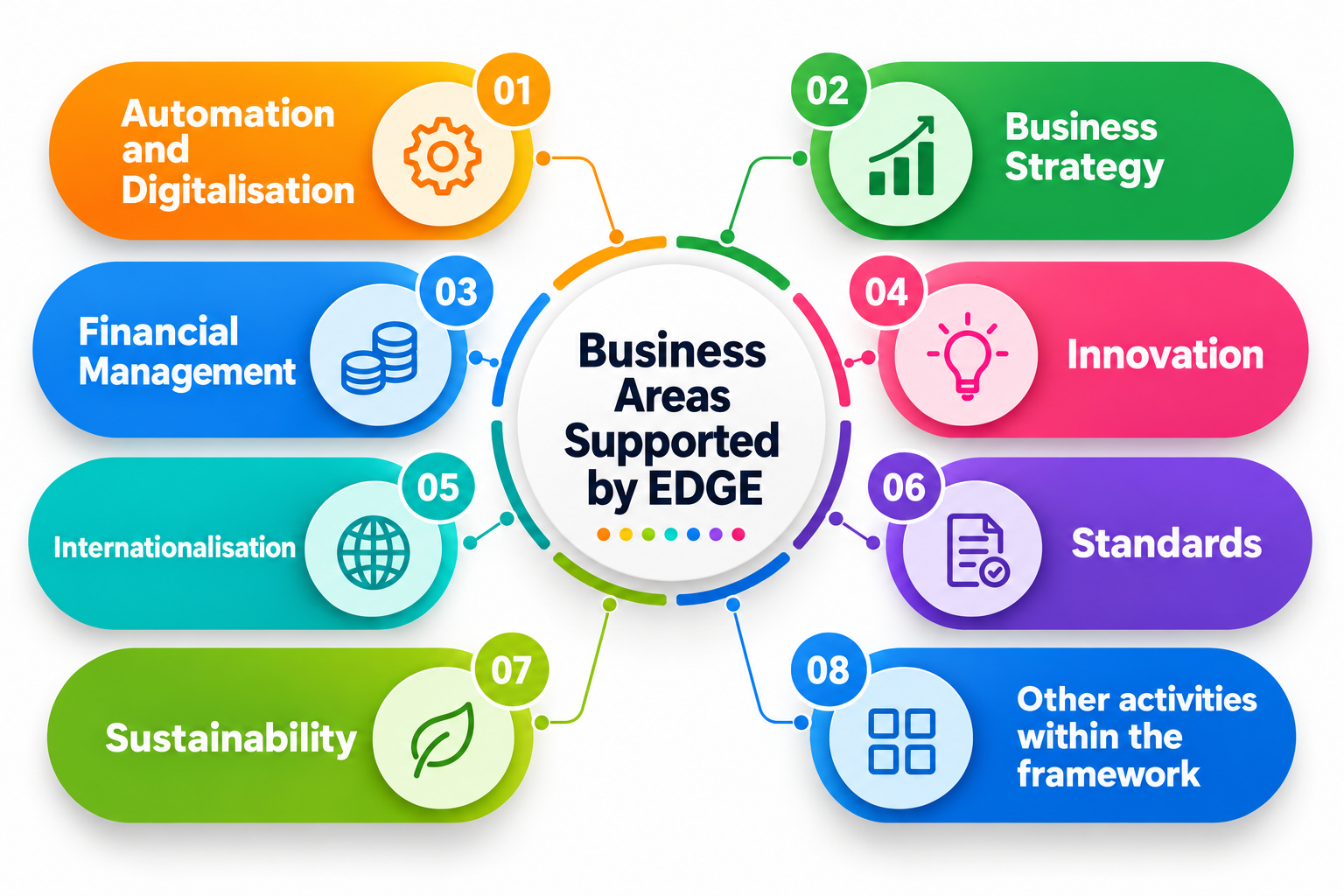
Businesses can explore support across eight business areas, including Automation and Digitalisation, Business Strategy, Financial Management, Innovation, Internationalisation, Standards and Sustainability, alongside other activities within the programme.
The key is to start with the business problem you want to solve rather than choosing a grant simply because it offers a particular funding percentage.
For the complete activity directory and eligibility details, visit the official EDGE Grant website.
Why did EDGE replace EDG, PSG and MRA?
Before EDGE launched, businesses had to determine which of three separate grant schemes matched their proposed project. Each programme served a different purpose, so companies needed to understand the relevant scheme before preparing an application.
EDGE brings these support areas under one framework, making it easier to identify the appropriate activity for a business objective.
The transition took effect on 30 September 2026. New applications under EDG, PSG and MRA ceased from that date, while applications submitted before the transition continue to be processed under the requirements of their original schemes.
Businesses that previously received support under one of the former grants may still apply for EDGE for a new eligible project. However, they cannot seek duplicate funding for the same project or eligible expenses.
What does the EDGE grant cover?
EDGE supports more than 150 activities across eight business areas. Each area addresses different business priorities, from improving internal processes to preparing for international growth.
The following examples illustrate the types of needs companies may investigate. Actual eligibility depends on the published activity requirements.
1. Automation and digitalisation
Digitalisation is not simply about purchasing new software. The objective is to improve how a business operates by reducing manual work, improving information flow and making processes more efficient.
Depending on the available activities, businesses may explore:
- Single-function digital solutions: Software designed to support a specific business function.
- Integrated enterprise systems: Platforms that connect multiple business functions.
- Pre-scoped equipment: Specified equipment intended to improve productivity.
- Large-scale automation: Projects designed to automate broader business processes.
- Large-scale digital transformation: Larger initiatives involving integrated technologies and wider operational changes.
For example, a company that manages its sales records in spreadsheets may investigate an eligible customer relationship management (CRM) solution. A manufacturer might instead need equipment that automates a production process, while a business with disconnected departments could explore an integrated enterprise system.
These are different project types, and the funding rules may differ accordingly.
2. Business strategy
A company experiencing rapid growth may find that its existing processes no longer support its ambitions. It may need to reassess its business model, operating structure, market positioning or growth plans.
Eligible strategy-related projects can help businesses address such challenges. Companies should review the relevant activity requirements to determine whether their proposed work falls within the programme.
3. Financial management
Financial management helps businesses understand their financial position, manage resources and make better decisions.
Depending on the available activity, companies can explore support for eligible improvements to their financial management capabilities. The important consideration is whether the proposed project matches the activity's scope and deliverables.
4. Innovation
Businesses may need to develop new capabilities, improve existing offerings or explore new ways to deliver value.
The Innovation category provides a starting point for identifying relevant support. Applicants should establish what the project intends to achieve and confirm which costs and activities are eligible before proceeding.
5. Internationalisation
Expanding overseas involves more than identifying potential customers. Businesses may need to research a market, develop an entry strategy and undertake eligible activities to establish their presence.
EDGE includes internationalisation support, with higher maximum funding rates for eligible activities in this category. The exact support available depends on the project and its requirements.
6. Standards
Some businesses need to strengthen their standards and certification practices to meet relevant commercial or operational requirements.
Under the applicable EDGE activities, support may be available for qualifying projects involving standards adoption. Requirements for consultants and certification bodies can apply, so companies should check the activity-specific conditions before appointing service providers.
7. Sustainability
Sustainability initiatives can help businesses understand their environmental, social and governance performance and identify areas for improvement.
For example, the Sustainability Services activity supports eligible businesses in measuring and assessing relevant ESG data and obtaining a performance score. Its published support level is up to 70% for SMEs and up to 50% for non-SMEs.
This is an example of a specific activity, not a guarantee that every sustainability-related expense will qualify.
8. Finding the right activity
Not every business project fits a single category. A company may be considering several investments at once, such as a digital solution, an operational improvement and an overseas expansion initiative.
Rather than combining unrelated costs into one application, businesses should identify the relevant activity for each project and review its conditions separately.
If you cannot find a suitable activity, you can approach an SME Centre for business advice and guidance on other support options.
How much funding can businesses receive under EDGE?
EDGE offers funding support based on the selected activity, the company's eligibility and the approved project expenditure.
The overall annual grant cap is S100,000 per company across eligible activities. Within that amount, a S$ 30,000 sub-cap applies to single-function digital solutions, integrated enterprise systems and pre-scoped equipment.
These are maximum framework-level rates, not guaranteed funding percentages. The relevant activity page determines the applicable rate, expenditure limits and qualifying conditions.
Who is eligible for the EDGE grant in Singapore?
Before preparing an application, companies should confirm that they meet the general eligibility criteria and the requirements of their chosen activity.
The main requirements include:
- Singapore registration: The applicant must be a business entity registered in Singapore.
- Local ownership: At least 30% ownership must be held by Singapore citizens and/or Singapore permanent residents. Activity-specific rules may specify how ownership is assessed.
- Eligible business activity: The proposed project must fall within a supportable EDGE activity.
- Suitable project scope: The project must meet the published conditions, including eligible costs and expected deliverables.
- No retrospective application: Work must not have started, and no payment or deposit must have been made before application submission.
- Appropriate supplier arrangements: Vendors and service providers must meet the applicable requirements and must not have prohibited relationships with the applicant or related parties.
Eligibility must continue to be maintained through the claim stage. If a company no longer meets the applicable requirements, its claim may not be supported.
What qualifies as an SME under EDGE?
For EDGE purposes, a company is classified as an SME if it meets either of the following thresholds:
- Group annual sales turnover of not more than S$100 million; or
- Group employment size of no more than 200 workers.
The group includes companies that own more than 50% of the applicant and companies in which the applicant owns more than 50%.
This definition is important because the funding rate can vary between SMEs and non-SMEs. Companies should assess their group structure rather than looking only at the applicant entity's standalone turnover or headcount.
How to choose the right EDGE activity fo your business
One of the most important decisions is selecting an activity that matches the project. Choosing the wrong category can lead to unnecessary preparation or an application that does not meet the grant's objectives. Start by answering these questions:
What business problem are you trying to solve?
Identify the operational or strategic challenge. For example, is your team spending too much time on manual processes, are your departments working with disconnected systems, or are you planning to enter a new market?
What outcome should the project deliver?
Define measurable results such as reduced processing time, improved reporting, increased production capacity or completion of an eligible market-entry initiative.
Which activity covers the proposed work?
Compare your project with the scope, eligibility requirements, supported costs and deliverables published on the EDGE website.
Does the activity require a pre-approved solution or vendor?
Some digitalisation activities require businesses to choose from published solution listings, while other activities have different vendor requirements.
Can your company fund the project upfront?
Because EDGE is reimbursement-based, the company must be able to pay the eligible expenses in full before claiming support.
If you are unsure which activity applies, seek advice from an SME Centre before making a commitment.
How to apply for the EDGE grant: Step-by-step guide
The application process varies by activity. However, the following steps provide a practical starting point for most businesses.
Step 1: Define your project
Explain what the business wants to achieve, why the project is necessary and what measurable outcomes it should deliver.
A clear project scope makes it easier to identify the appropriate activity and prepare the supporting documents.
Step 2: Review the official activity requirements
Visit the EDGE Grant website and select the relevant business area.
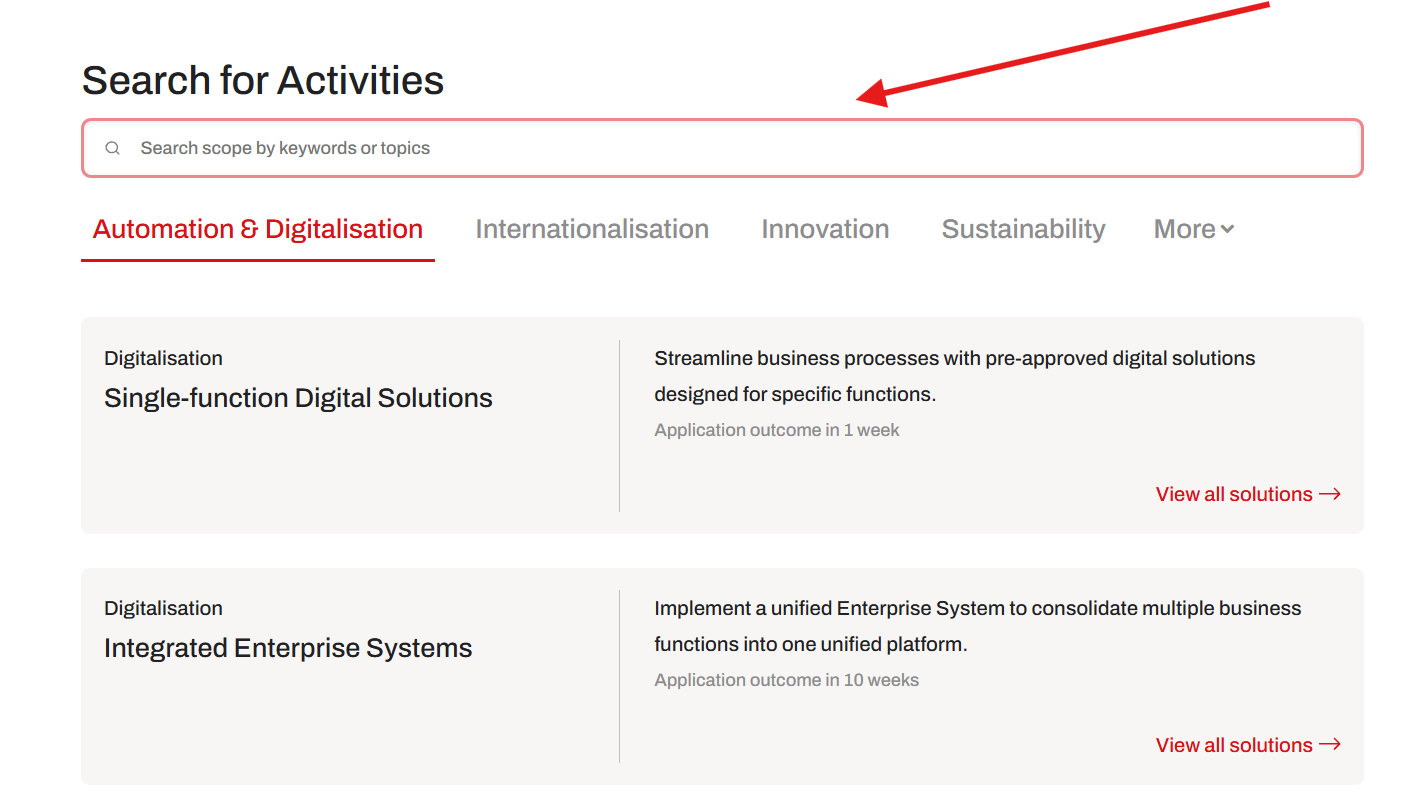
Review the funding rate, expenditure limits, project duration, eligibility requirements and deliverables. Do not rely solely on general grant summaries because individual activities may have different conditions.
Step 3: Check your company's eligibility

Confirm the applicant entity's Singapore registration, local ownership and SME status, where applicable.
Also check whether the project has previously received funding and whether any supplier relationship could affect eligibility.
Step 4: Identify a suitable vendor or solution
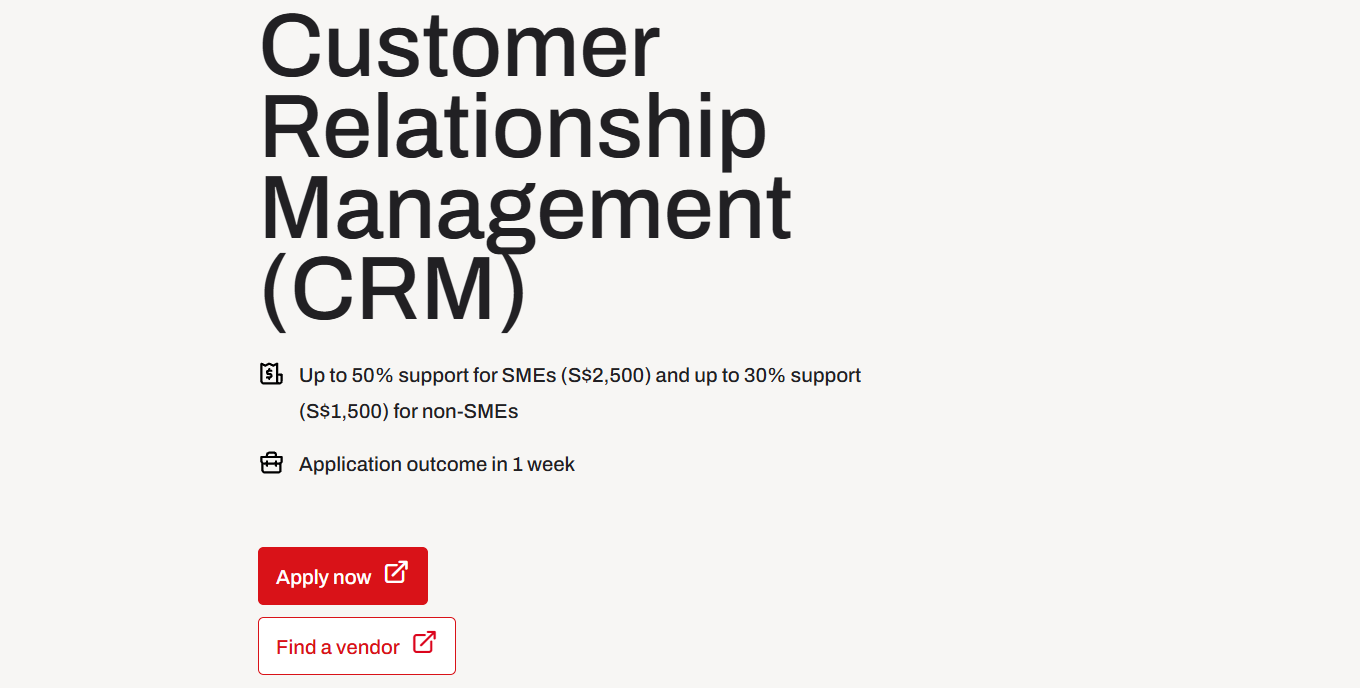
Some activities require a pre-approved solution, while others permit a wider choice of suppliers.
Compare the proposed solution's capabilities, scope, pricing and implementation requirements. Obtain the quotation and supporting documents specified by the activity.
For digitalisation projects, businesses can review SMEs Go Digital. For example, companies considering customer management software can explore its CRM category.
Step 5: Prepare the required documents
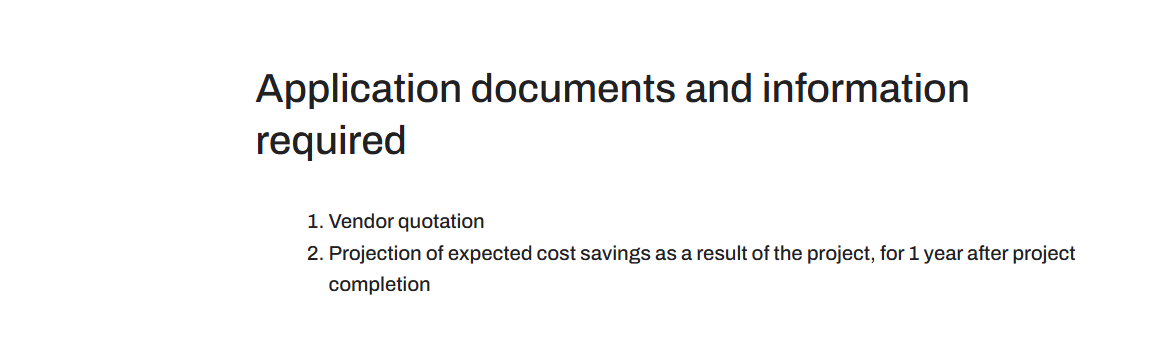
Depending on the activity, documents may include:
- A vendor quotation or project proposal.
- A detailed breakdown of the proposed costs.
- A projection of expected cost savings for one year after project completion, where required.
- Information about the proposed solution and its implementation.
- Other supporting documents specified on the activity page.
For a digital solution, the business should be prepared to explain how the proposed investment will improve its operations and demonstrate the expected benefits.
Step 6: Submit the application through BGP
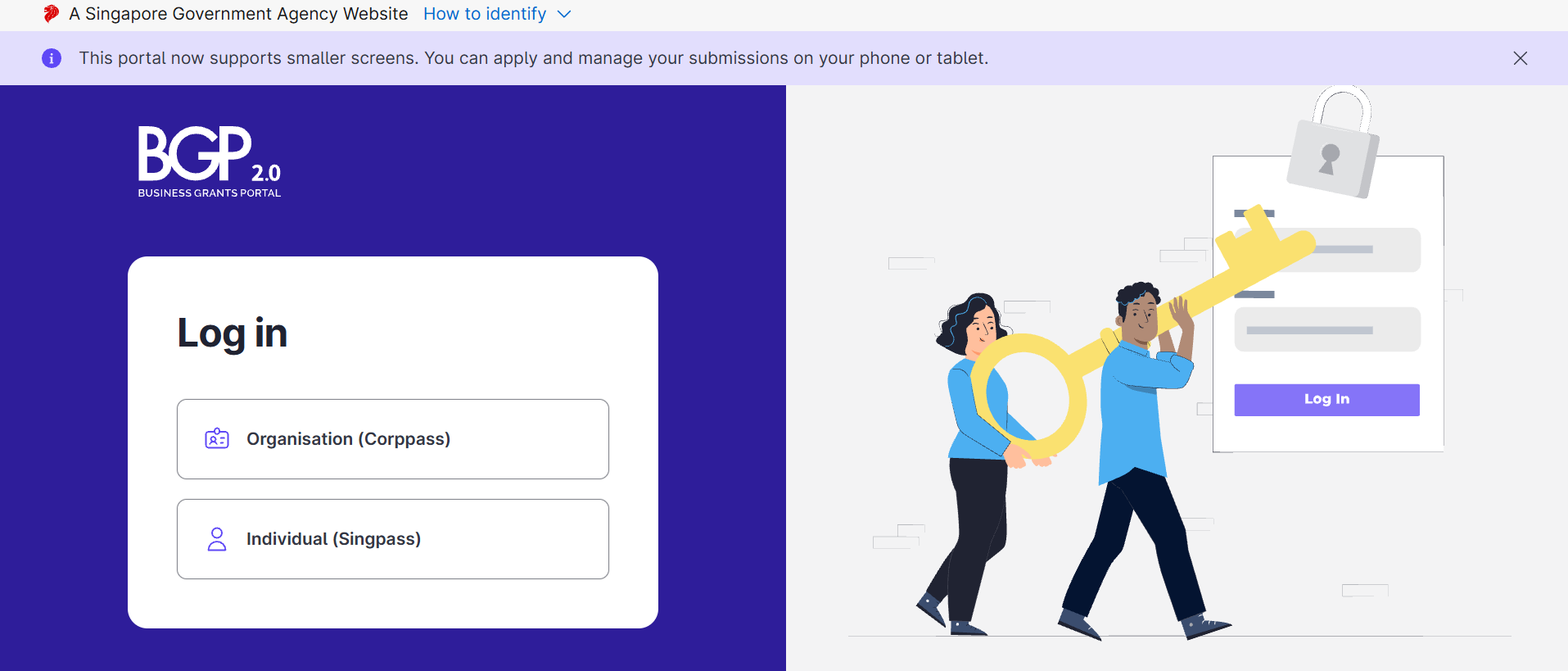
Apply through the Business Grants Portal using the company's authorised Corppass account.
The application must be submitted by authorised personnel of the applicant company. Vendors, service providers and other third parties cannot submit or manage the grant application on the company's behalf.
Step 7: Review and accept the letter of offer
If approved, the company receives a Letter of Offer containing the approved grant amount, project qualifying period, conditions and deliverables.
Review these details carefully. They establish what the company must complete and document to qualify for reimbursement.
Step 8: Complete the approved project
Implement the project within the approved period and meet the required deliverables.
Keep invoices, proof of payment, implementation records and other supporting documents. Only expenditure approved under the Letter of Offer is eligible for support.
Step 9: Prepare and submit the claim
Once the project is complete and all project expenses have been paid in full, submit the claim through BGP.
The claim must include the required deliverables documentation and expense verification documents. Respond promptly if Enterprise Singapore requests clarification.
Step 10: Receive the grant disbursement
After claim approval, the grant is paid into the stipulated company bank account.
PayNow Corporate is the preferred disbursement method, while GIRO is also available. The specific activity's instructions provide the applicable disbursement details and timeline.
EDGE grant requirements and key rules to remember
A successful application involves more than meeting the basic eligibility criteria. Businesses should pay attention to the following rules throughout the project.
1. Do not start the project before applying
An application is retrospective if work has started or a payment or deposit has been made to a supplier before submission. Such applications will not be supported.
Complete your preparation first, then submit the application before committing to the project.
2. Do not assume three quotations are mandatory
The required documents vary by activity. Enterprise Singapore advises businesses to review the relevant application requirements and exercise due diligence when selecting suppliers.
3. Avoid duplicate funding
Companies cannot seek EDGE support for expenses that have already received grant approval from Enterprise Singapore or another government agency.
Businesses that previously received EDG, PSG or MRA support may apply for a new eligible project, but should not seek funding for the same project or expenses again.
5. Keep the project within its approved scope
The Letter of Offer specifies the project qualifying period and deliverables. Changes should follow the official change-request process and are subject to approval.
6. Submit the claim before the deadline
Missing the claim due date can prevent the company from submitting its claim through BGP. Keep track of the deadline and allow sufficient time to prepare the supporting documents.
7. Remember that funding is reimbursement-based
The company must pay all project expenses in full before submitting the claim. Grant approval does not remove the need for upfront cash flow.
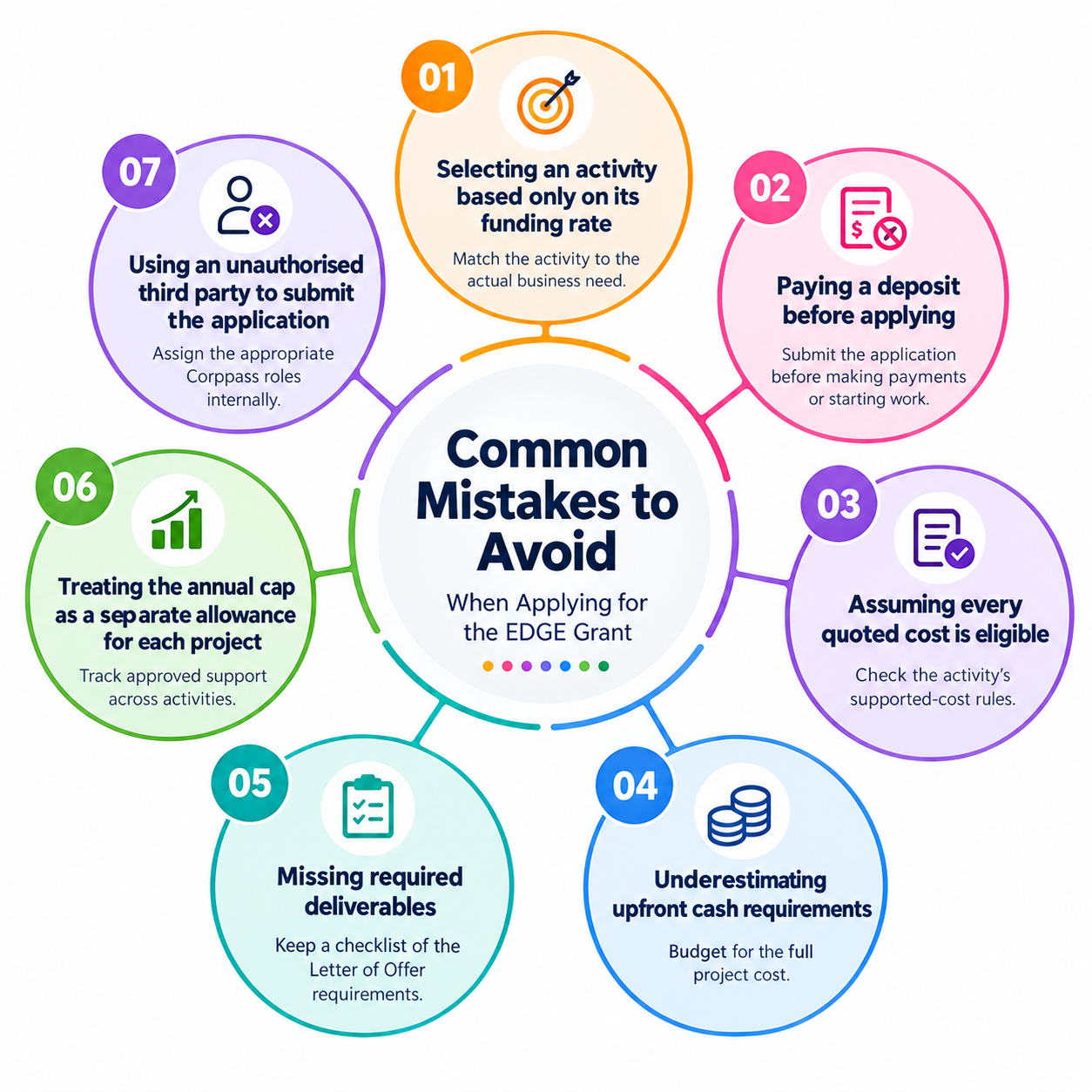
What are the common mistakes to avoid when applying for EDGE?
Businesses can reduce avoidable delays by checking these points before submitting an application.
Final thoughts: How should businesses prepare for EDGE in 2026?
The EDGE Grant gives Singapore businesses a central framework for exploring support across digitalisation, automation, strategy, innovation, internationalisation, standards and sustainability.
However, the best approach is not to start with the maximum grant amount. Start by identifying the business challenge, deciding what the project should achieve and finding the activity that matches its scope.
Before submitting an application, confirm your company's eligibility, check the applicable funding limits, prepare the required documents and make sure you can cover the full upfront cost. These steps can help you assess the opportunity more realistically and avoid common application mistakes.
Whether your business is adopting a digital solution, integrating its internal systems, improving operational efficiency or expanding overseas, the relevant EDGE activity should guide your decision.
Key takeaways
- Launched on 30 September 2026, EDGE replaced EDG, PSG and MRA for new applications, simplifying access to business funding.
- The grant covers more than 150 activities, including automation, digitalisation, business strategy, innovation, internationalisation and sustainability.
- Eligible businesses can receive up to S$100,000 in total grant support per year, including a S$30,000 sub-cap for specified digitalisation and automation activities.
- Support rates vary by activity, with higher rates available for eligible internationalisation and sustainability projects.
- Applicants must be Singapore-registered business entities with at least 30% ownership by Singapore citizens and/or permanent residents, subject to activity-specific conditions.
- Businesses must submit their applications before starting work or making any payment or deposit to a vendor.
- Companies must complete the approved project, meet the required deliverables and pay eligible expenses in full before submitting a claim.
Frequently asked questions
1. What is the EDGE Grant in Singapore?
EDGE is Enterprise Singapore's business grant framework, launched on 30 September 2026. It consolidates EDG, PSG and MRA and supports eligible projects across digitalisation, automation, business development, internationalisation and other capability-building areas.
2. What does EDGE stand for?
EDGE is not an acronym. The name conveys the programme's intention to help Singapore enterprises gain an edge over their competitors.
3. How much funding can a company receive?
The overall annual grant cap is S100,000percompanyacrosseligibleactivities.AS30,000 sub-cap applies to specified digitalisation and automation activities within that limit.
4. Can an SME receive 70% funding?
Eligible SMEs can receive up to 70% support for specified internationalisation and sustainability activities. Standard SME activities offer up to 50% support. The actual rate depends on the selected activity.
5. Can a company apply for multiple EDGE activities?
Yes. Companies may submit separate applications for different eligible activities, subject to the relevant requirements and annual grant caps.
6. Can a company apply if it previously received PSG or EDG support?
Yes, provided the new project is eligible and does not duplicate funding for the same project or expenses. Previous funding under a former scheme does not automatically prevent a company from applying for a different eligible EDGE project.
7. Can a business receive the grant before paying the vendor?
No. EDGE operates on a reimbursement basis. The business must complete the approved project and pay the eligible expenses in full before submitting its claim.
8. How long does EDGE approval take?
Processing time depends on the activity and, in some cases, the vendor arrangement. For example, the official ERP activity lists an application outcome in one week for pre-approved vendors and ten weeks for non-pre-approved vendors. These timelines should not be applied to every EDGE activity.
9. Can a company apply for an unlisted digital solution?
Businesses should first check the official activity listings. Some activities permit alternative vendor arrangements, while others require a listed solution. For integrated ERP, the official activity allows a suitable alternative vendor when the required functions are unavailable through the pre-approved options, subject to its requirements.
10. Where can I apply for the EDGE Grant?
Start with the official EDGE Grant website, identify the relevant activity and follow the application link to the Business Grants Portal.