


How multi-channel ticketing transforms technical support operations?
Technical support teams need faster, smarter ways to manage customer requests across multiple channels. Learn how multi-channel ticketing unifies conversations and helps businesses in efficient customer support through a single centralised platform.
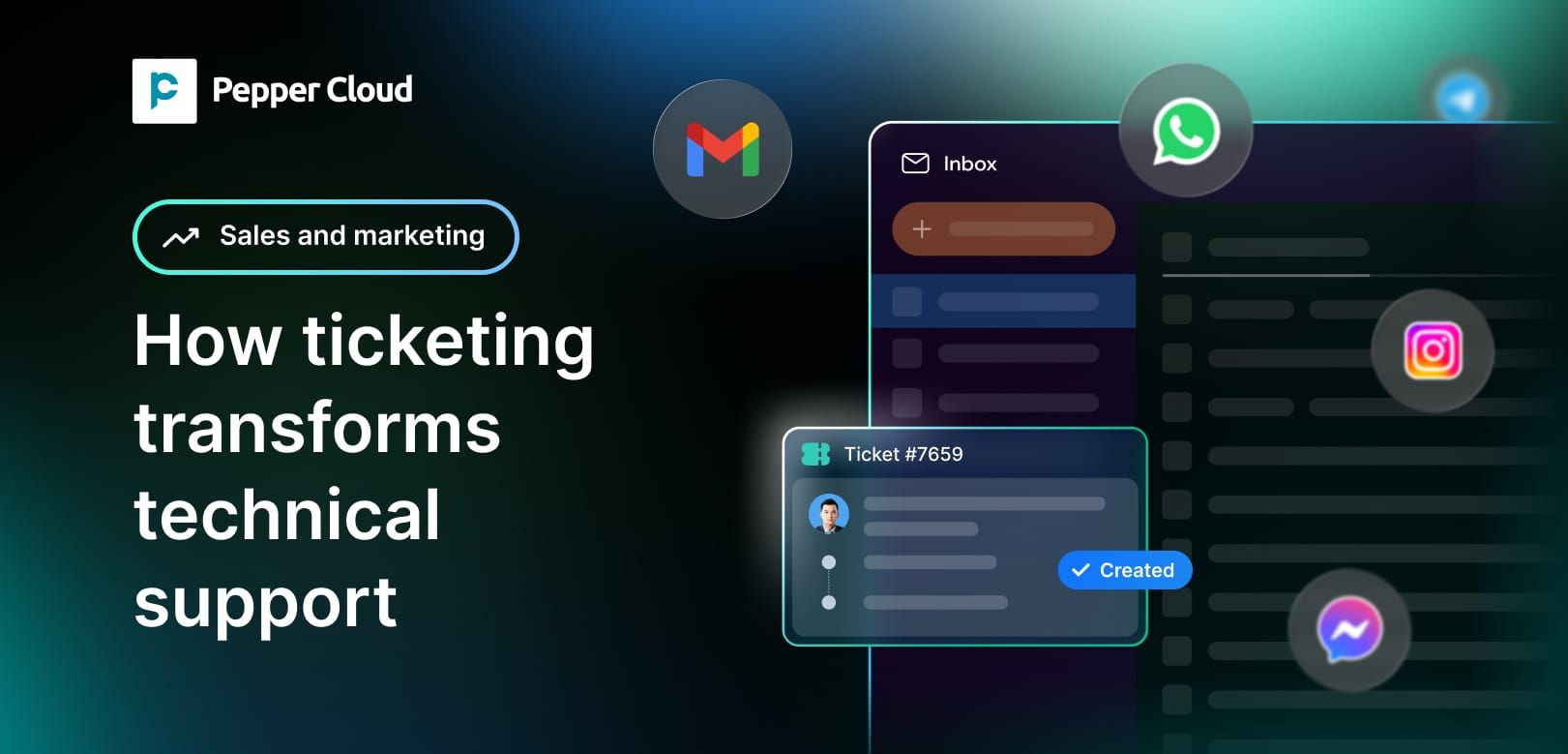

Technical support teams today operate in an environment where speed, accuracy and customer expectations are higher than ever before. Customers no longer rely on a single communication channel when reporting issues. They may raise a support request through email, follow up via WhatsApp, initiate a live chat session, and call the support desk if the issue becomes urgent.
While this creates convenience for customers, it often creates operational complexity for support teams. When these interactions are managed through separate systems, critical information becomes fragmented across multiple platforms.
The impact of these communication silos extends beyond internal inefficiencies. Delayed responses, duplicate tickets, missed escalations and inconsistent customer experiences can directly affect service quality, customer satisfaction and retention.
This is where multi-channel ticketing becomes essential.
By consolidating customer interactions from email, WhatsApp, live chat, phone calls and other support channels into a single platform, organisations can create a unified support environment that improves visibility, accelerates response times and streamlines technical support workflows.
What is multi-channel ticketing?
Multi-channel ticketing is a support management approach that brings customer conversations from multiple communication channels such as email, WhatsApp, live chat, web forms and phone calls, into a single platform. Instead of managing separate inboxes and disconnected support tools, teams can track, assign and resolve issues from one centralised workspace.
For technical support teams, this creates a complete view of customer interactions, reduces communication gaps and helps engineers focus on solving problems rather than searching for information.
The true cost of communication silos
When a business uses separate apps for email, live chat, WhatsApp, and phone support, it creates what IT experts call data fragmentation. If a client reaches out via email and then follows up on WhatsApp out of anxiety, two different agents might pick up the exact same issue. This results in double the work for your team and conflicting, confusing messages for the client.
Recent industry data reveals the stark reality of modern consumer expectations: 75% of customers now demand a consistent experience across every single channel they choose to use. If your internal tools cannot speak to one another, achieving that consistency is practically impossible.
Without a centralised helpdesk layout, your technical specialists waste valuable minutes hunting for context instead of solving the core bug. They have to ask the user to repeat their software versions, incident history, and error logs all over again. In high-stakes tech environments, these lost minutes can carry a heavy price tag.
Bringing every conversation into one shared workspace
One of the most significant advantages of multi-channel ticketing is the ability to centralise conversations.
Whether a request arrives through email, live chat, WhatsApp or another support channel, it enters a shared queue where teams can view, prioritise and manage it efficiently.
Consider a software outage affecting an enterprise customer. The system administrator submits a detailed incident report through a support portal. Moments later, their operations manager sends a WhatsApp message requesting an urgent update.
In a disconnected environment, these interactions could become separate tickets handled by different people.
Within a unified support platform such as Pepper Cloud AI CRM, however, both conversations are linked together automatically. The assigned engineer receives a complete timeline of customer interactions in one place, providing immediate context without switching between systems.
This centralised view enables faster decision-making and creates a more consistent experience for customers.
 Pepper Cloud Marketing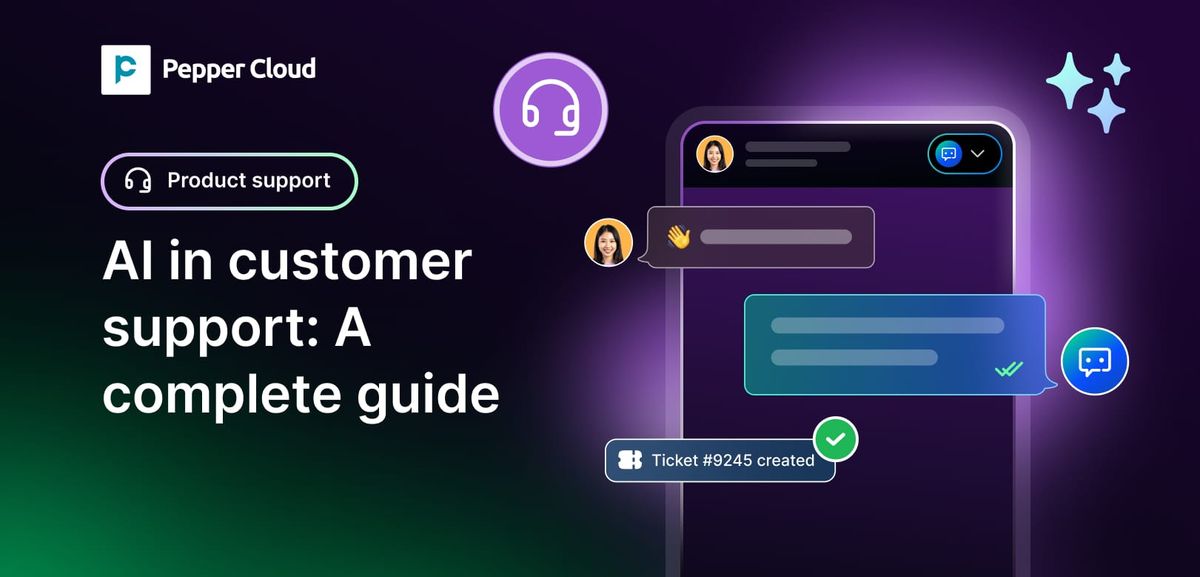
Improving response times through intelligent automation
In technical support, speed matters. Even when a problem cannot be solved immediately, customers want reassurance that their issue has been acknowledged and is being investigated.
Traditional support environments often rely on manual ticket assignment. Managers review incoming requests, determine priority levels and allocate work accordingly. While manageable at low volumes, this approach quickly becomes inefficient as ticket numbers increase.
Modern multi-channel ticketing systems remove this bottleneck through automation.
Tickets can be assigned automatically based on workload, expertise, availability or issue type. Database-related issues can be routed directly to database specialists, while API integration problems are sent to the appropriate engineering team.
Round-robin assignment ensures workloads are distributed fairly across agents, while capacity limits prevent individual team members from becoming overwhelmed.
By reducing manual intervention, support teams can significantly improve first-response times and ensure critical incidents reach the right people sooner.
 Pepper Cloud Marketing
Supporting customers around the clock
Technical issues rarely occur at convenient times. Servers fail overnight. Integrations break during weekends. Users experience access issues outside normal business hours.
For organisations supporting global customers, waiting until the next working day is often not an option.
This is where AI-powered support capabilities provide significant value. AssistAI can handle routine enquiries, answer common questions and guide users through basic troubleshooting steps even when support teams are offline.
For example, if a customer reports an access issue at midnight, AI can immediately verify account status, collect diagnostic information and provide relevant troubleshooting guidance.
If the issue requires human intervention, the system can automatically create a ticket, assign the appropriate priority level and notify the on-call engineer.
Rather than leaving customers waiting for a response, organisations can maintain continuity of service regardless of the time of day.
Meeting service level agreements with confidence
In the B2B tech world, a Service Level Agreement (SLA) is a legally binding promise. Failing to respond to a critical severity-one incident within thirty minutes can trigger severe financial penalties.
Managing these strict deadlines across scattered communication channels is a logistical nightmare. A multi-channel framework fixes this by attaching live, dynamic SLA countdown timers to every single incoming conversation.
If an incoming WhatsApp message or email is dangerously close to breaching its response window, the system automatically sounds the alarm. It escalates the case to a team lead or shifts the ticket to an active agent who is marked as available.
This level of automated visibility protects your business relationships and keeps internal operations highly accountable.
Features that strengthen technical support workflows
While the exact capabilities vary between platforms, modern customer support solutions generally focus on improving visibility, automation and collaboration.
Shared omnichannel inbox
Brings conversations from WhatsApp, email, web chat and other channels into a single workspace.
Pepper Cloud gathers your WhatsApp, email, and live chats into one shared inbox . As a result, your team can handle every message from a single screen.
Automated ticket routing
Assigns tickets automatically based on predefined rules, skills, departments or workloads.
AssistAI support automation
Provides automated responses, gathers customer information and assists with routine support requests.
Peppercloud can answer customer questions automatically. collect order details, and hand over complex chats to agents.
SLA tracking and monitoring
Tracks response and resolution deadlines while triggering alerts for at-risk tickets.
Customer interaction timelines
Creates a complete record of customer communications and support history.
Task and activity management
Allows teams to convert support conversations into actionable tasks and monitor progress.
Role-based access controls
Helps organisations maintain security while ensuring employees only access relevant information.
Reporting and analytics
Provides insights into ticket volumes, response times, resolution rates and overall team performance.
Together, these capabilities create a more organised and efficient support operation.
Why technical support teams are moving towards omnichannel service desks?
The role of technical support has evolved considerably.
Customers no longer judge support teams solely on their ability to solve problems. They also evaluate how quickly teams respond, how consistently they communicate and how easy it is to receive assistance.
As organisations scale, managing these expectations through disconnected channels becomes increasingly difficult.
Multi-channel ticketing addresses this challenge by creating a unified support ecosystem where conversations, workflows and customer information remain connected.
Engineers spend less time gathering context. Managers gain better visibility into team performance. Customers receive faster and more consistent support. The result is a more efficient operation for the business and a better experience for the customer.
The final verdict
Speed has become one of the most valuable assets in modern technical support. When systems fail, customers want answers quickly. They expect support teams to understand their situation, access their history and provide assistance without forcing them to repeat information across multiple channels.
Multi-channel ticketing helps organisations meet these expectations by bringing communication, automation and service management into one centralised environment.
By combining a unified inbox, intelligent routing, AI-powered assistance and SLA monitoring, support teams can reduce friction, improve productivity and resolve issues faster.
For businesses looking to modernise their support operations, multi-channel ticketing is no longer simply a useful feature. It is a practical foundation for delivering efficient, scalable and customer-focused technical support.
Key takeaways
- Multi-channel ticketing centralises customer interactions from multiple communication channels.
- A unified inbox eliminates fragmented conversations and duplicate tickets.
- Automated routing helps reduce response times and improve workload distribution.
- AI-powered support enables round-the-clock assistance for routine enquiries.
- SLA tracking helps teams meet response and resolution commitments consistently.
- Centralised customer histories improve troubleshooting and collaboration.
- Pepper Cloud AI CRM combines omnichannel communication, automation, AI assistance and reporting within a single platform.
- Modern technical support teams benefit significantly from connected systems rather than isolated communication tools.
Frequently asked questions
What is multi-channel ticketing?
Multi-channel ticketing is a support system that consolidates customer enquiries from channels such as email, WhatsApp, live chat and phone calls into one centralised platform.
Why is multi-channel ticketing important for technical support?
It helps support teams manage conversations more efficiently, reduce response times, eliminate duplicate work and improve customer satisfaction.
How does automated ticket routing work?
Automated routing uses predefined rules to assign incoming tickets to the most suitable team member based on expertise, availability, workload or issue type.
Can AI assist with technical support requests?
Yes. AI tools can answer common questions, collect diagnostic information, guide users through troubleshooting steps and escalate complex issues when necessary.
What features should organisations look for in a multi-channel ticketing solution?
Key features include a shared inbox, automated ticket routing, SLA tracking, AI assistance, customer interaction history, reporting capabilities and role-based access controls.